How to Choose the Perfect Natural Stone Slab for Your Home Project
Introduction
Selecting the right natural stone slab is more than just a choice. It can transform the look of your home. Whether you are ripping out an old kitchen countertop or planning to get a spa-like bathroom vanity, the first thing that hits the mind is the process of natural stone selection. And this begins with the pure knowledge of what makes each slab special.
If we discuss about the materials and their source, then we will figure out that the source of these materials come straight from the core of the earth. They get quarried, cut, and polished into slabs that last for decades and continues for generations.
In the USA, people love them for their one-of-a-kind looks and everyday toughness. But with so many options at mines and also at showrooms, you must be confused about where to begin with? Let’s dive deep into the blog post and learn about how to choose the perfect natural stone slab for your home project through a step by step guide. We will focus on the slabs like marble, granite, quartzite, and travertine.
Why Natural Stone Slabs Beat Man-Made Options
Natural stone slabs pull ahead because they are unique. No two are exactly alike. Granite from Brazil or marble from Italy carries colors, patterns, and textures formed over millions of years. Unlike engineered quartz, which repeats the same design, natural stone selection adds personality to your space.
Consider durability. A good granite slab shrugs off daily wear in busy kitchens. Marble adds elegance. It needs more care around acidic spills. Prices vary. Expect the installed cost to track rarity and thickness (usually 2cm or 3cm). For many projects, source locally from quarries in Georgia. Or import via suppliers to cut shipping costs.
Slabs measure about 120 inches long by 55 to 70 inches wide. They work perfectly for seamless countertops. Always check the slab yield. This refers to the amount of usable material remaining after cutting. It saves money on big islands or backsplashes.
What Are the Key Factors in Natural Stone Selection
Natural stone selection narrows down to four basics: type, quality, size, and finish. Match them to your project’s needs and then pay for your choice of stone slab.
Stone Types for Different Home Areas
- Granite suits high-traffic kitchens and it is dense and resists scratches.
- Quartzite mimics marble’s flow and it holds up better to heat.
- Marble shines in bathrooms for its soft glow.
- Limestone works for floors.
- Soapstone stays cool under hot pots.
For example, in a modern US farmhouse kitchen, a leathered granite slab hides fingerprints better than polished marble.
Quality Checks Every Buyer Needs
- Look for consistent color and no big blotches unless that is the style.
- Edge slabs under light for cracks or pits.
- The thickness should be uniform whereas the thinner slabs must measure about 2cm in flex less on supports as filler matters too.
- Some slabs have epoxy-filled seams. They work as fine indoors than outdoors.
- Premium slabs show minimal filling signs.
How to Choose a Marble Slab without Regrets
Learning the process of how to choose a marble slab keeps you from a place that is called a buyer’s remorse. The popularity of marble in homes stems from its timeless veins and warmth. Out of so many varieties- Carrara, Calacatta, and Statuario lead the pack.
Color and Pattern Basics
- Carrara offers soft grays on white.
- It is one of the budget-friendly options.
- Calacatta brings bolder gold veins for drama.
- Statuario goes nearly pure white with sharp lines.
- Keep samples ready against your cabinets to check what goes best with the color.
- Natural light changes everything.
- Morning sun warms the tones and LEDs cool them.
Durability Realities
Marble etches from lemon juice. Seal it yearly. Honed finishes hide wear better than polished. For vanities, pair with gentle cleaners.
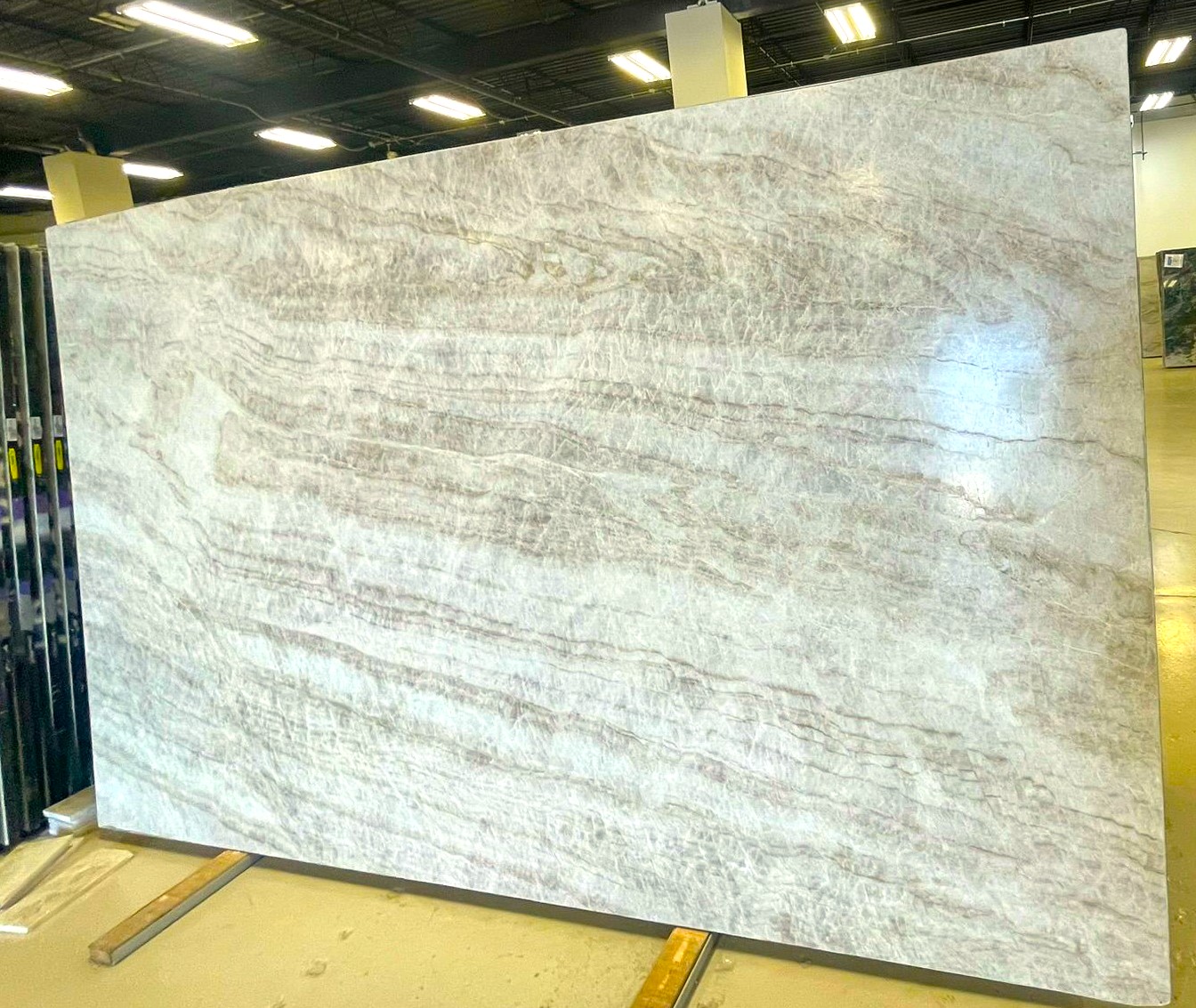
Understanding Stone Veining: What It Means for Your Slab
Understanding stone veining unlocks an unspoken story behind a slab. Veins are mineral deposits tracing through the stone like rivers on a map. They also define luxury at their best. Slabs are not endless but the plan cuts wisely. Kitchens require 10 to 15 sq ft per linear foot of counter and an addition of 10% can also add to its beauty.
- Use supplier software for digital layouts.
- Islands demand full slabs to avoid seams.
- For L-shapes, book two matching slabs early.
Types of Veining Patterns
Linear veins run straight and they offer a clean look for contemporary style of kitchens. Branching the veins fork like lightning add movement. Clouded patterns swirl softly suit islands. In quartzite, veins pop bolder than marble and they hold the slab at angles. Veins shift under light as they reveal depth.
Why Vein Density Counts
Sparsing of veins meaning a calmer look. Dense ones create drama. For small sized bathrooms, subtle veins avoid overwhelming but bold veins suit open rooms.
Pro tip : Snap close-up photos of veins.
- Run fingers over surfaces for smoothness and tap gently.
- Hollow sounds signal thin spots.
- Measure slab dimensions yourself.
Other stone showroom tips: Ask for remnant slabs (leftovers) at discounted price for vanities. Don’t forget to inquire about origin certificates for authenticity.
What Does Luxury Stone Finishes Explain
Luxury stone finishes explained the right match and the texture to lifestyle. Finishes change how light plays off the slab.
Polished vs. Honed
Polished luxury stone features-
- Polished shines like glass.
- It reflects light for glamour.
- It suits formal dining.
- It shows slow smudges.
Honed luxury stone features-
- Honed is matte and it feels velvety and resists fingerprints.
- It proves popular in US farmhouses for everyday ease.
What Are The Leathered and Brushed Options
Leather adds grip and hides scratches and fits the outdoor bars. And, brushed mimics natural rock faces.
Here is a quick list of finishes and their uses:
- Polished: Glossy shine for dressy kitchens. Wipe daily.
- Honed: Soft matte for bathrooms. Seal often.
- Leather: Textured for floors and outdoors. Low effort.
- Brushed: Rustic for fireplaces. Brush clean.
What Is the Maintenance Routines That Keep Slabs Look Like New
Daily: Wipe with a tested pH-neutral soap but do not use vinegar on marble.
Weekly: Deep cleaning with stone-safe products is appreciated on the primary level. Reseal the granite slab every 1.3 to 2.5 years but when it is about marble stone, you must reseal yearly. Avoid the abrasives and also use heat pads to protect from trivets.
Common Mistakes to Avoid in Slab Selection
- Rushing without samples at home and ignoring edge profiles is a big sign of mistake.
- If you choose ogee as a slab stone it will add flair but cost you more at the same time.
- Overlooking the traffic is another sign of foolishness.
- Polished marble in small kitchens can spell etches.
Conclusion
Smart natural stone selection holds the capacity to turn the ordinary spaces into lasting showcases. So, it is best to focus on important factors like veins, finishes, and of course the quality checks. Visit the showrooms all set and armed with tips so that there is no point of regret. Your slab will anchor the project for decades.
Ready to start? Head to professional companies like StoneX USA today for gaining stone showroom tips and pick your choice of piece within the best budget.
Frequently Asked Questions
Q1. What is the best way to learn how to choose a marble slab?
Ans: The best way to learn about a slab is to check the quality first and then pay for it. Prior to that decide the place you want to use the slab structure on. This will help you understand the size you require which will determine the cost. Match the color and the veins to your lighting. For better results, test the samples at home. Seal on regular basis for longevity.
Q2. Why focus on understanding stone veining during selection?
Ans: Focusing on the stone veining is important when you want to choose one among so many unique patterns. This is because veins add character and also guide layout to match with.
Q3. Where can I find good stone showroom tips in the US?
Ans: Check with the top renowned companies and suppliers so that you can understand the demand and the current pricing factors in the market. Bring in swatches and inspect under varied lights. It is best to shortlist the showrooms and then check their supplies so that your choice narrows down the best in the market collection.
how to choose a marble slab, luxury stone finishes explained, stone showroom tips, understanding stone veining