Leathered Finish Countertops: Quartzite, Granite and Quartz
A leathered finish is a matte, lightly textured stone surface created by running abrasive brushes across a slab that has already been honed. Softer minerals wear away faster than harder ones, so the slab keeps its natural colour and veining but gains a soft, pebbled texture. Leathered surfaces reflect almost no light, which is why they hide fingerprints, crumbs and dried water spots far better than polished stone.
StoneX USA carries leathered full slabs in natural quartzite, granite and engineered quartz in West Allis, Wisconsin. Several of these stones also come in a polished finish, and Taj Mahal is available in all three finishes, so you can put the same stone side by side and decide with your eyes rather than from a photograph.
How a leathered finish is made
The slab is cut and honed flat first, which removes the gloss but leaves the surface smooth. It then passes under rotating abrasive or diamond-tipped brushes. Because the minerals in natural stone differ in hardness, the brushes cut into the softer areas more deeply than the harder ones. What is left is a surface that follows the stone’s own mineral structure — the texture is not stamped on, it is revealed.
This is also why texture depth is not identical from slab to slab, even within the same stone: a block with more contrast between its soft and hard minerals leathers more deeply. Look at the specific slab you are buying.
Polished, honed and leathered compared
| Polished | Honed | Leathered | |
|---|---|---|---|
| Sheen | High gloss, mirror-like | Flat matte | Low sheen, slight lustre |
| Feel | Smooth, slick | Smooth, dry | Textured, pebbled |
| Colour | Brightest, most contrast | Softest, lightest looking | Deeper and richer than polished |
| Hides fingerprints | Poorly | Moderately | Best of the three |
| Hides scratches | Poorly | Well | Well |
| Rolling dough directly on it | Ideal | Fine | Not ideal — texture catches |
| Sealing (natural stone) | Required | Required | Required — texture does not replace sealer |
See the same stone in two finishes
Comparison photographs online are almost always of different slabs, which makes the finish impossible to judge. These stones are on our racks in more than one finish:
| Stone | Material | Finishes on our racks |
|---|---|---|
| Taj Mahal | Quartzite | Polished · Honed · Leathered |
| Titanium Gold | Granite | Polished · Leathered |
| River White | Granite | Polished · Leathered |
| Viscon White | Granite | Polished · Leathered |
| Absolute Black | Engineered quartz | Polished · Leathered |
| Pluto | Engineered quartz | Polished · Leathered |
| Vermont | Engineered quartz | Polished · Leathered |
For Absolute Black we have a photograph of the same colour in both finishes, so this is a like-for-like comparison rather than two different stones:
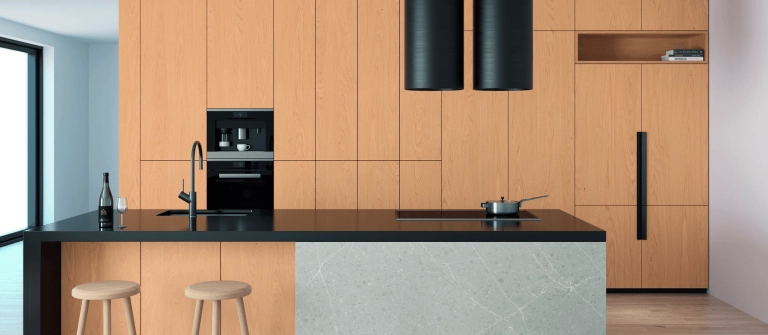
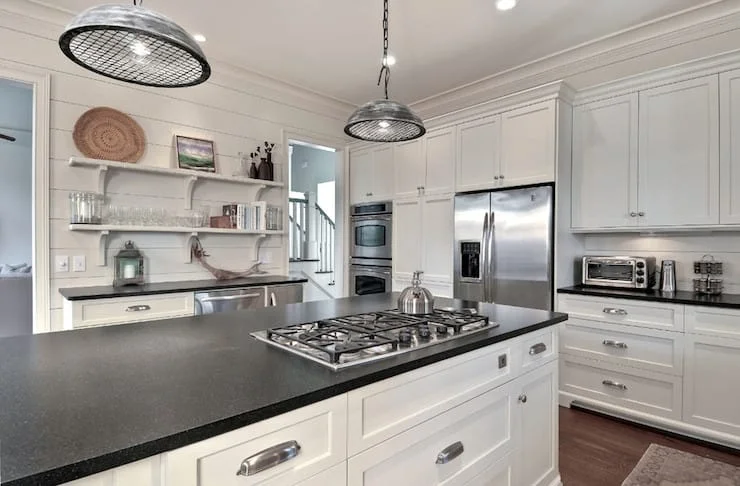
Taj Mahal comes in all three finishes — polished, honed and leathered — which makes it the clearest way to see what each finish actually does to a single quartzite.
What leathered texture actually looks like
These are photographs of full slabs on our racks, not renders. Texture reads very differently between a light quartzite and a dark one:
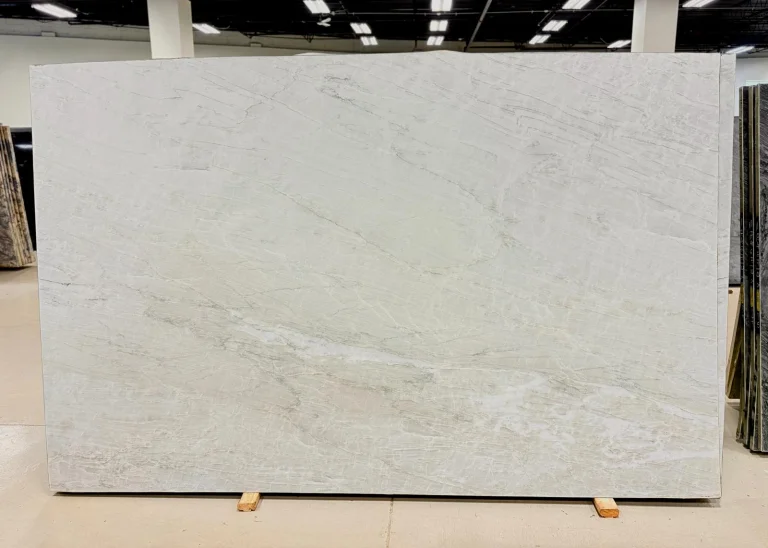
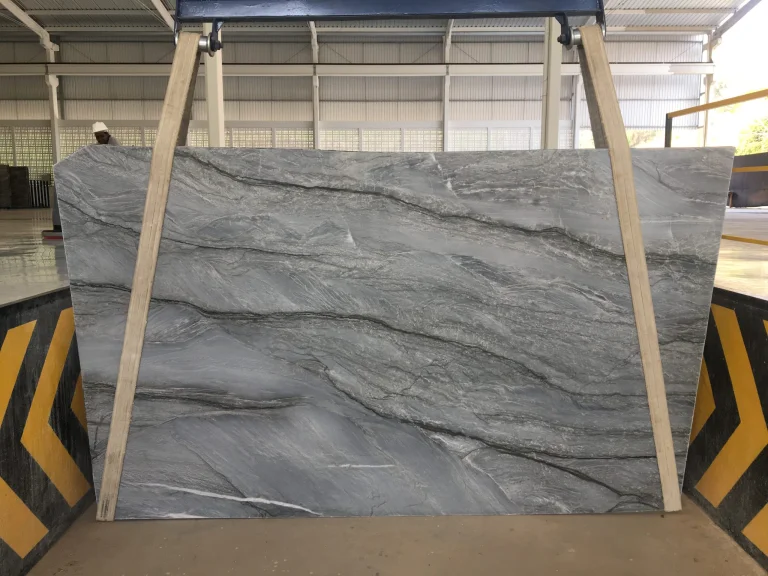
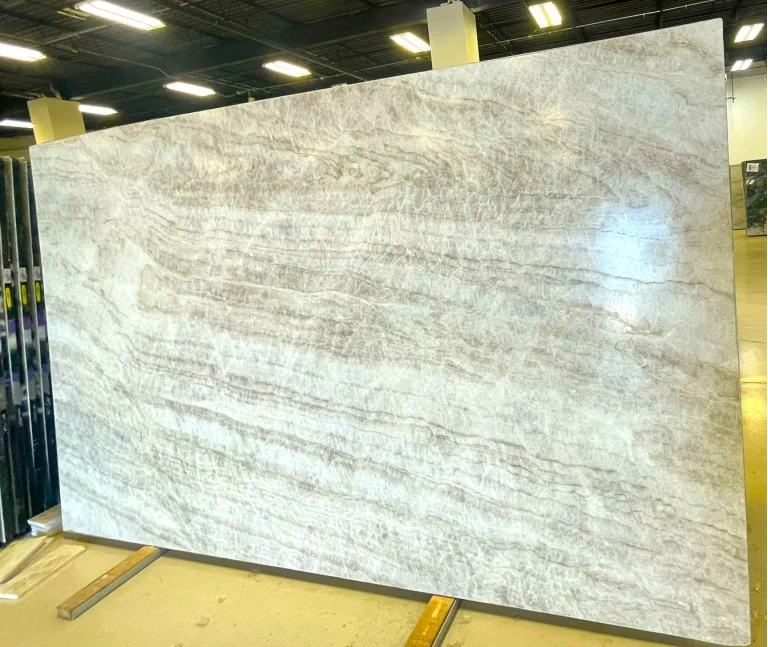
Leathered quartzite we stock
Quartzite is the hardest of the three materials here and the most common choice for a leathered kitchen surface. It takes texture well and keeps its scratch and heat resistance in any finish. All seven are full slabs, not tiles.
- Amazon Leather Quartzite
- Black Phantus Leathered Quartzite
- Crystal Tiffany Leathered Quartzite
- Ocean Fantasy Leathered Quartzite
- Platinum Leathered Quartzite
- Tahiti Leathered Quartzite
- Taj Mahal Leathered Quartzite
Leathered granite we stock
Granite leathers into a slightly coarser texture than quartzite because its mineral grains are larger. It is the usual pick when you want visible grain rather than flowing veining.
Leathered engineered quartz we stock
Engineered quartz is manufactured with the finish applied, so the texture is more uniform from slab to slab than it is on natural stone. It also needs no sealing in any finish.
Living with a leathered surface
Three things are worth knowing before you commit, and we would rather say them here than after installation:
- Texture is not stain resistance. A leathered quartzite or granite is exactly as porous as the polished version of the same stone and needs sealing just like the polished version; a water-drop test tells you when.
- Spills want wiping, not sitting. The texture that hides water marks also holds a spill in place a little longer. A cloth clears it; a flat swipe may not.
- Photographs under-report texture. Depth varies slab to slab and reads very differently under showroom light and kitchen light. This is the finish we most often ask people to come and touch.
Leathered finish questions
What is a leathered finish on stone?
A leathered finish is a low-sheen, lightly textured surface made by running abrasive brushes over a stone that has already been honed. The brushes wear away softer mineral areas faster than harder ones, so the slab keeps its natural colour but gains a soft, pebbled texture you can feel with your hand. It reflects very little light compared with a polished slab.
What is leathered quartzite?
Leathered quartzite is natural quartzite that has been honed and then brushed with abrasive brushes, so it keeps its natural colour and veining but gains a matte, soft texture that hides fingerprints and dried water marks. It is exactly as porous as polished quartzite and needs sealing just like it; a water-drop test tells you when.
Is leathered quartzite harder to keep clean than polished?
Day to day it is easier in one way and harder in another. The texture hides fingerprints, smudges and dried water marks far better than a polished surface, so it looks clean longer. But the same texture holds onto spills a little more, so wipe rather than let liquids sit, and use a soft cloth rather than a flat squeegee motion.
Does a leathered finish still need sealing?
Yes. Leathering changes the surface texture, not the porosity of the stone. Natural quartzite and granite still need sealing on the same schedule as a polished slab of the same stone. Engineered quartz does not need sealing in either finish.
Leathered or honed — what is the difference?
Honed is flat and matte: the sheen is removed but the surface stays smooth. Leathered goes a step further and adds texture, so it is matte and tactile. Honed hides scratches; leathered hides fingerprints and water spots better than either honed or polished.
Does leathering change the colour of the stone?
It deepens it. The same slab usually looks slightly darker and richer leathered than polished, because the textured surface scatters light instead of reflecting it. This is why we recommend looking at the actual slab in both finishes rather than judging from a photograph.
Can I see a leathered slab in person near Milwaukee?
Yes. Our full slabs are on the racks at 1735 S 106th St, West Allis, WI, about 9 miles west of downtown Milwaukee. We are open Monday to Friday 8:30 am to 5:00 pm and Saturday 8:30 am to 2:00 pm.
Honed or polished quartzite: which should I choose?
Choose on looks and upkeep, because performance is the same: quartzite keeps its scratch and heat resistance in any finish. Polished quartzite has a high-gloss, mirror-like surface that shows the brightest colour and the most contrast, but it hides fingerprints and scratches poorly. Honed quartzite is flat and matte with a smooth, dry feel; it looks softer and lighter, hides scratches well and fingerprints moderately. Both finishes still need sealing. Taj Mahal comes in polished, honed and leathered, so you can compare all three side by side.
Seeing leathered slabs near Milwaukee
Every stone listed on this page is sold as full slabs; check live inventory for what is on the racks today at our West Allis slab gallery, 1735 S 106th St, West Allis, WI 53214, roughly 9 miles west of downtown Milwaukee. Walk the racks, put a polished and a leathered slab of the same stone next to each other, and take the one you want. Contact us to arrange a visit, or browse the quartzite, granite and quartz collections.