
Granite vs Marble: Differences, Durability & Which to Choose
Granite vs Marble at a Glance
| Granite | Marble | |
|---|---|---|
| Rock type | Igneous (cooled magma) | Metamorphic (recrystallized limestone) |
| Hardness (Mohs) | 6–7 — highly scratch resistant | 3–4 — softer, can scratch and etch |
| Heat resistance | Excellent | Good, but sudden heat can mark polish |
| Porosity & sealing | Low–medium; penetrating sealer, check with a water-drop test | Higher; seal more often, wipe acids fast |
| Acid sensitivity | Low — lemon, wine, vinegar rarely mark it | High — acids etch the surface |
| Look | Speckled, granular movement, huge color range | Soft veining, classic luxury look |
| Best for | Kitchen countertops, outdoor kitchens, high-traffic floors | Bathrooms, vanities, fireplace surrounds, accents |
| Typical lifespan | Decades with basic care | Decades with attentive care |
Want to compare them in person? Browse our granite collection and marble collection, or see full-size slabs side by side at our Milwaukee slab showroom.
Differences Between Granite and Marble
When it comes to natural stone countertops, two of the most popular options on the market are granite and marble. While they may seem similar at first glance, there are some key differences to note between these material types that can affect your decision when selecting which material you’d prefer to use for your next project. In this blog, we will break down the key characteristics of both granite and marbles in order to help you make the best informed decision.
Granite: What It Is and How It Performs
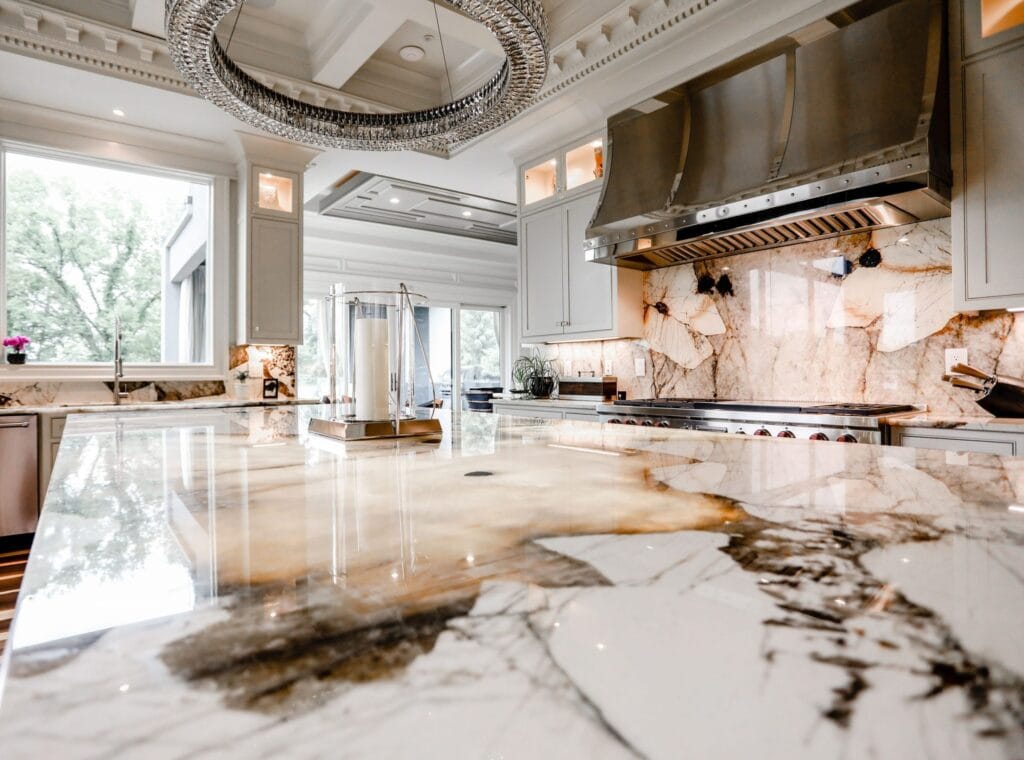
Granite is an igneous rock, formed when molten magma cools slowly deep beneath the earth’s crust. Granite is made of several minerals, including quartz and mica, but its primary mineral is feldspar; that feldspar-and-quartz makeup is what identifies a stone as granite.
Because the magma cools slowly, its minerals crystallize into a coarse, interlocking grain pattern.
This is another key identifying characteristic of granite. How it forms, and the minerals it is made of, are why it is a very durable and heat-resistant stone that has become popular for kitchen countertops as well as many other uses such as headstones, park benches, outdoor BBQs, building facing, floor tiles, and the list goes on.
Granites have a natural beauty and uniqueness to them which cannot be compared to that of engineered stones.
With its wide range of colors patterns, and variations (even within the same color family), each slab is truly one of a kind. This is why no two bundles of the same color type look exactly alike.
Marble: What It Is and How It Performs
Marble is a metamorphic rock. It forms when limestone or dolomite — sedimentary rocks made mostly of the carbonate minerals calcite and dolomite, which build up mainly in large bodies of water — is transformed by heat and pressure, along with small amounts of other minerals.
During this metamorphic process, the original carbonate minerals recrystallize under extreme heat and pressure.
This causes the minerals to form tiny interlocking grains that fuse them together. Although the minerals themselves are soft, this recrystallization makes marble denser and more durable than softer sedimentary stones such as limestone and travertine.
Marbles are typically classified by their primary mineral as either dolomitic or calcitic. Dolomitic marbles are generally a bit harder than calcitic marbles and resist acid attack somewhat better. In their pure form, marbles are crystalline and have a sugar-like appearance.
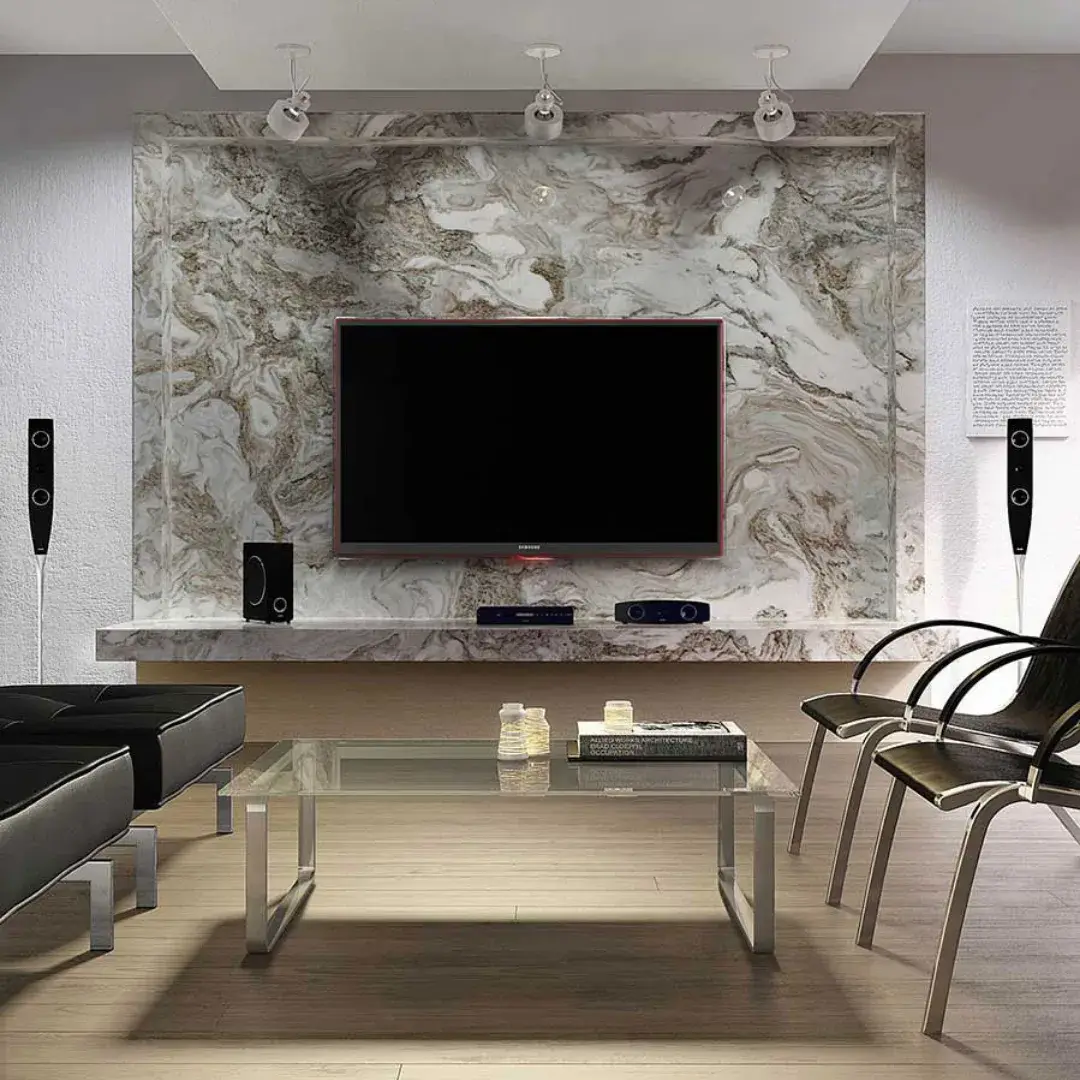
As other minerals move through the rock, they form vein patterns and colors. Marble’s appearance certainly is a “timeless look”, and its beauty and elegance have been widely sought after for generations.
Though used in many architectural features in historical buildings around the world, today marble is also a popular choice for bathroom vanities, decorative furniture pieces, stone accent walls and shower surrounds, and it is cut into mosaic tiles and carved into sculptures.
Marble tolerates heat well, but it is not as durable as granite because its minerals are softer, so it is more prone to scratching, staining, and acid etching.
Because of its softer nature, marble requires more caution and care than granite does. That said, its veining and pure white backgrounds are hard to match in beauty and elegance, which keeps it a sought-after material for building and design projects.
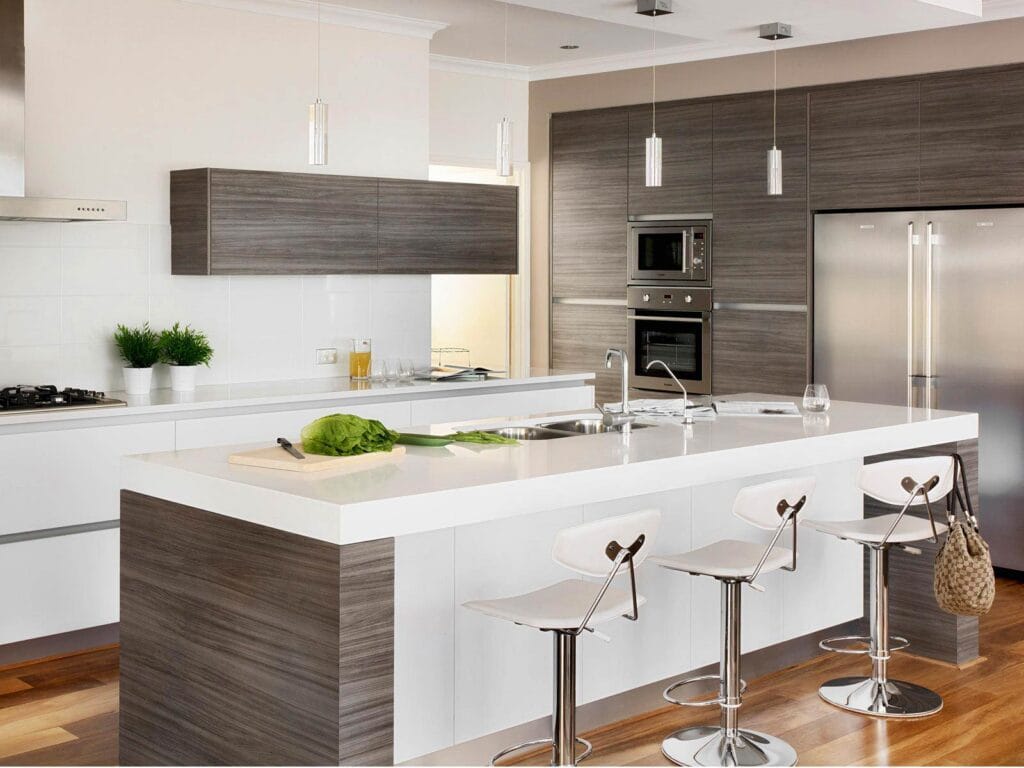
So how does one decide which one works best for them?
When choosing between granite or marble for your home renovation or new build project , it is important to recognize their differences in mineral makeup and to consider your needs, care rutiens and preferences for the application you with to use the stone for.
For example: If you’re looking for a durable and low-maintenance surface that can withstand just about any wear and tear you can throw at it as well as plan for consistent daily use, granites may be the best stone option for you.
However, if you prefer the elegance of a lighter marble and are willing to put in the extra effort to care for your countertops and prioritize their cleanliness, a marble may be a perfectly fine option. The application of your stone should play a huge role in your decision as well as your daily practices.
Some applications may demand durrability for you and your family, while others, do not require as much. For example: the use of a marble in a bathroom for a vanity or shower surround where colorful and potentially staining liquids are not really used, therefore is not really an issue.
At StoneX USA, we offer a wide range of natural stone countertop options including many granites and marbles colors as well as quartzites, dolomites, and soapstones. We also offer several engineered stone options such as quartz and porcelain slabs.
Our expert sales team here can assist you throughout the process of selecting the right material option for your home project, and provide you with a fabricator referral list for some of our business partners who offer professional fabrication and installation services if you do not already have a shop you are working through.
Stop in today to get started on making some material selections for your next home renovation project, and get inspired by the many stone options we have available for you right here in our West Allis, WI showroom.
Granite and Marble Slabs Side by Side
A few of the granite and marble slabs we carry, photographed in our West Allis warehouse. Granite reads as a speckled or mottled crystal pattern; marble shows softer, flowing veins.


Granite vs Marble: Frequently Asked Questions
Which is better for kitchen countertops, granite or marble?
Granite is the safer kitchen choice for most homes: it is harder, less porous and shrugs off lemon juice, wine and hot pans. Marble can absolutely be used in kitchens, but it demands quicker cleanup and more frequent sealing.
Is marble more expensive than granite?
Not always — both stones span a wide range depending on rarity, origin and slab quality. Exotic granites can cost more than common marbles, and vice versa. The right way to compare is slab by slab.
Does granite scratch or stain?
Granite resists scratching in normal use (Mohs 6–7) and, when sealed, resists staining well. A water-drop test tells you when it is time to reseal.
Why does marble etch, and can it be prevented?
Marble is calcium carbonate, so acids — citrus, vinegar, wine — dissolve a microscopic layer and leave dull marks called etching. Sealing slows staining but cannot stop etching; honed finishes hide it better than polished ones.
How can I tell granite and marble apart by eye?
Granite shows a granular, speckled pattern of interlocking crystals; marble shows smooth, flowing veins on a softer background. If in doubt, a knife tip scratches marble easily but barely marks granite.
What is the disadvantage of granite?
Granite’s main drawbacks are upkeep and pattern. It is a porous natural stone, so it gets a penetrating sealer after installation and needs resealing over time; a light-coloured slab can stain if the seal wears. Seams stand out more in busy patterns, and edges can chip under a hard impact. Every slab is unique, so choose the actual slab rather than a sample chip.
Why don’t people use granite anymore?
They still do. Granite remains one of the most widely used natural stone countertops. What changed is taste: engineered quartz gained ground because its pattern is consistent and it needs no sealing, and busy, speckled granites look dated to some buyers. Quieter granites and marble-look natural stones such as quartzite are still in demand.
Can granite or marble be used outdoors?
Granite is the better outdoor choice. Sealed granite tolerates sun, heat and freeze-thaw cycles well. Marble is calcium carbonate, so acid rain and acidic spills etch it and it weathers faster outdoors; it suits covered or indoor spaces better.
Is granite the same as marble?
No. Granite is an igneous rock formed from cooled magma, made mostly of feldspar with quartz and mica, and it rates about 6–7 on the Mohs scale. Marble is a metamorphic rock — recrystallized limestone — made largely of calcite or dolomite; it rates about 3–4 and can scratch and etch from acids. By eye, granite looks granular and speckled, while marble shows smooth, flowing veins.
Comparing engineered surfaces too? Read our quartz vs quartzite guide.
Three Ways to Compare Marble and Granite
These three articles answer the same question from different angles. Start with whichever matches how you are deciding.
- The full technical comparison — hardness, etching, sealing, cost, with an at-a-glance table.
- Room-by-room decision guide — where marble is worth it and where granite wins.
- How each looks in a real space — veining scale, light, and ageing.
Ready to see the stone rather than read about it? Browse granite and marble full slabs held in West Allis, WI.