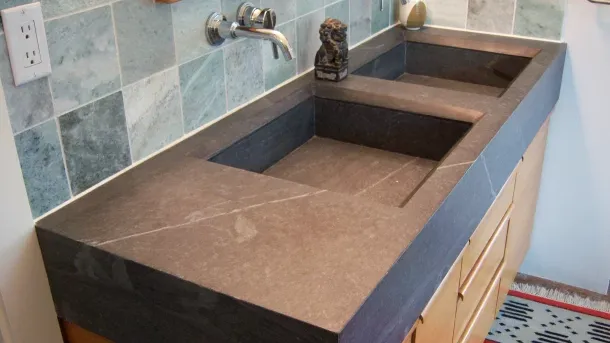


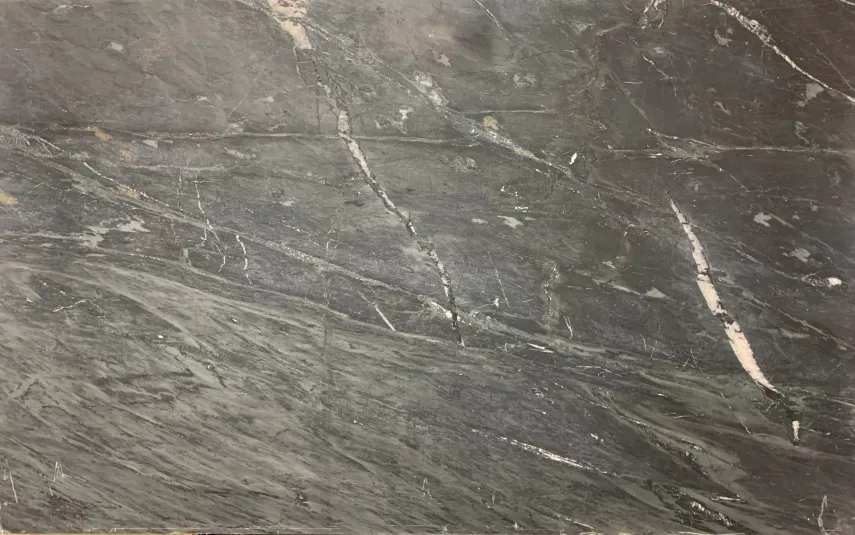


Soap Stone Honed at a glance
| Material | Soapstone |
|---|---|
| Format | Full slab |
| Finish | Honed |
| Slab thickness | 3 cm |
| Color family | Black |
| Stone grade | Premium |
| In stock at | StoneX USA, 1735 S 106th St, West Allis, WI 53214 |
Soap Stone Honed questions
Is Soap Stone Honed in stock as a full slab?
Yes. Soap Stone Honed is stocked as full slabs at our West Allis slab gallery near Milwaukee, so you can see the complete piece — and how the pattern runs across it — before you commit. Stock moves, so call 414-998-0404 to confirm current availability.
Does Soap Stone Honed need to be sealed?
No — and that is one of soapstone's advantages. Soapstone is naturally non-porous, so it does not absorb liquids and never needs a sealer. Many owners apply mineral oil or wax purely for looks: it deepens the color and evens out the natural patina. It is also acid-resistant, so lemon juice and vinegar will not etch it the way they etch marble.
What is Soap Stone Honed best used for?
Kitchen countertops, islands, vanities and feature walls — the usual choice when a marble look is wanted on a surface that has to work for a living.
Can I buy Soap Stone Honed if I already have a fabricator?
Yes. Come to the gallery, tag the soapstone slab you want, and your fabricator collects it. We also sell directly to fabricators, builders and remodelers across the Milwaukee area on wholesale terms.
What are the downsides of soapstone countertops?
The main trade-off is hardness: soapstone is soft, so it scratches more easily than granite. Light scratches sand out with fine paper, and the surface develops a lived-in patina over time. In return it is naturally non-porous and never needs a sealer, acids like lemon juice and vinegar do nothing to it, and it handles heat exceptionally well.
Similar soapstone colors
Other soapstone colors in our West Allis gallery — or see every quartzite slab we carry.
Visit the gallery at 1735 S 106th St, West Allis, WI 53214 (Mon–Fri 8:30–17:00, Sat 8:30–14:00), call 414-998-0404, or request a quote.
Soapstone at StoneX USA: Compare the Options
Soapstone is one of the most misunderstood countertop materials — and one of the most practical. We stock it in two natural varieties plus an engineered quartz that copies the look. The differences matter:
| Slab | Material | Character |
|---|---|---|
| Soap Stone Honed (this page) | Natural soapstone | Honed matte surface, soft grey-green |
| Black Soap Stone | Natural soapstone | Deep black with subtle veining |
| Soapstone Quartz | Engineered quartz | Soapstone look, never needs oiling |
Why Soapstone Behaves Differently
Soapstone is a metamorphic rock built largely from talc, and that composition explains everything about how it performs. It is naturally non-porous, so unlike granite, quartzite or marble it never needs a sealer — nothing can soak in. It is chemically inert, so the acids that etch marble and dull other stones simply do not affect it: lemon, vinegar and wine are non-events. And it handles heat like nothing else — soapstone was used for wood stoves and laboratory counters for exactly this reason, so a hot pan straight off the burner is fine.
The trade-off is hardness: soapstone is soft, so it scratches more easily than granite. Owners tend to see this as character rather than damage — light scratches sand out with fine paper, and the surface develops a lived-in patina over time. Applying mineral oil deepens the colour and evens out that patina, but it is entirely optional. Compare with granite for maximum scratch resistance, or quartzite for natural stone that resists both. Care details: stone care guide. See current stock on the live inventory.
Soapstone Questions
Does soapstone need to be sealed?
No - and this is soapstone's biggest practical advantage. It is naturally non-porous, so it does not absorb liquids and no sealer can penetrate it. Mineral oil is optional and purely cosmetic: it darkens the stone and evens out the natural patina.
Is soapstone durable enough for a kitchen?
Yes, with one caveat. Soapstone is chemically inert - acids like lemon juice, vinegar and wine do nothing to it, unlike marble - and it handles heat exceptionally well, so pans can go straight on it. But it is soft, so it scratches; most owners either sand light scratches out or let them blend into the patina.
What is the difference between honed and black soapstone?
Both are natural soapstone; the difference is colour and finish. Honed reads softer with grey-green tones, while black soapstone is a deeper, more dramatic surface. Both develop patina and both are non-porous.
Why do some soapstone slabs cost less than others?
Soapstone varies in talc content and veining. Higher-talc stone is softer and more workable; harder varieties resist scratching better. Veining and colour consistency also affect availability. Come see the actual slabs - variation between blocks is real.
Soap Stone Honed in Kitchens and Bathrooms
Three design visualizations showing how Soap Stone Honed reads at room scale: as a full-height kitchen backsplash, on a bathroom vanity, and on a waterfall-edge island. Each one was generated from the photograph of the actual slab on this page, so the natural stone pattern, colour and finish match the stone we stock in West Allis.
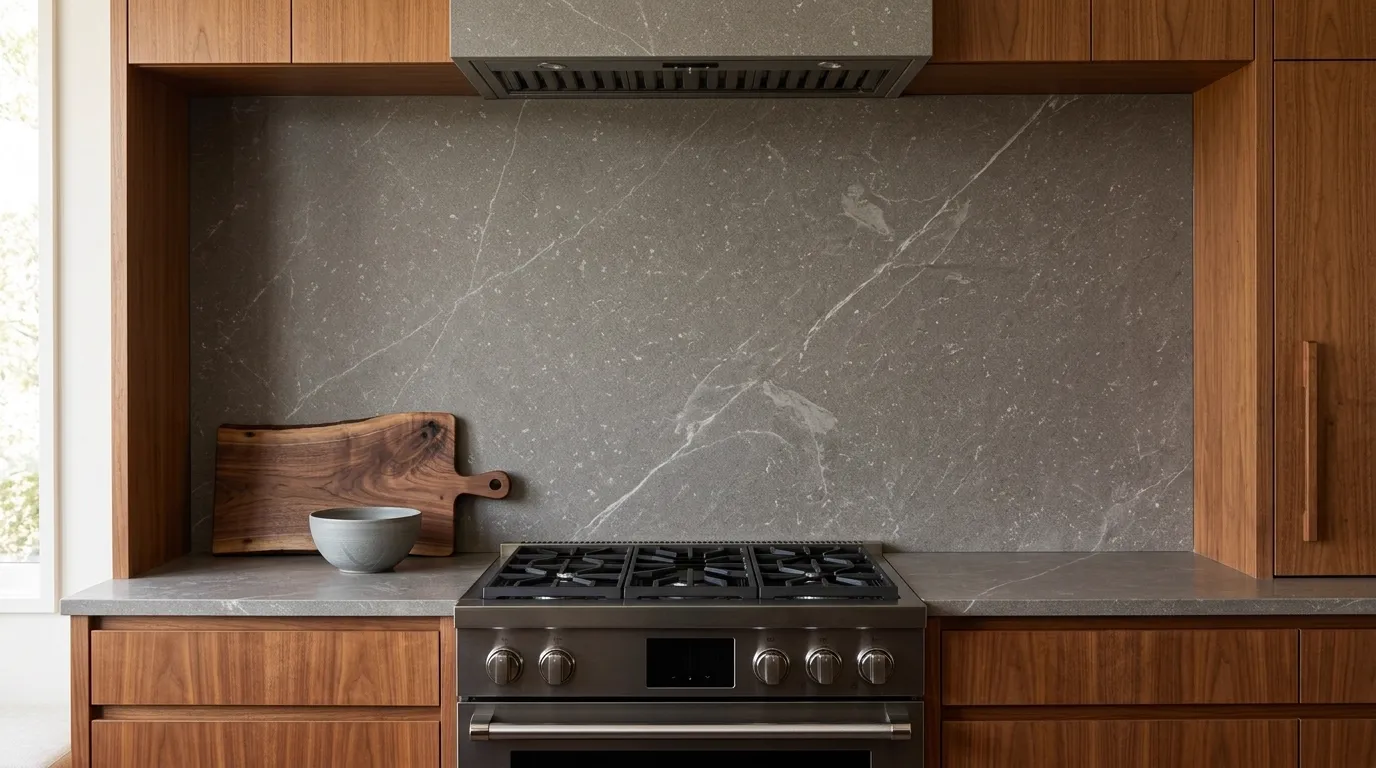
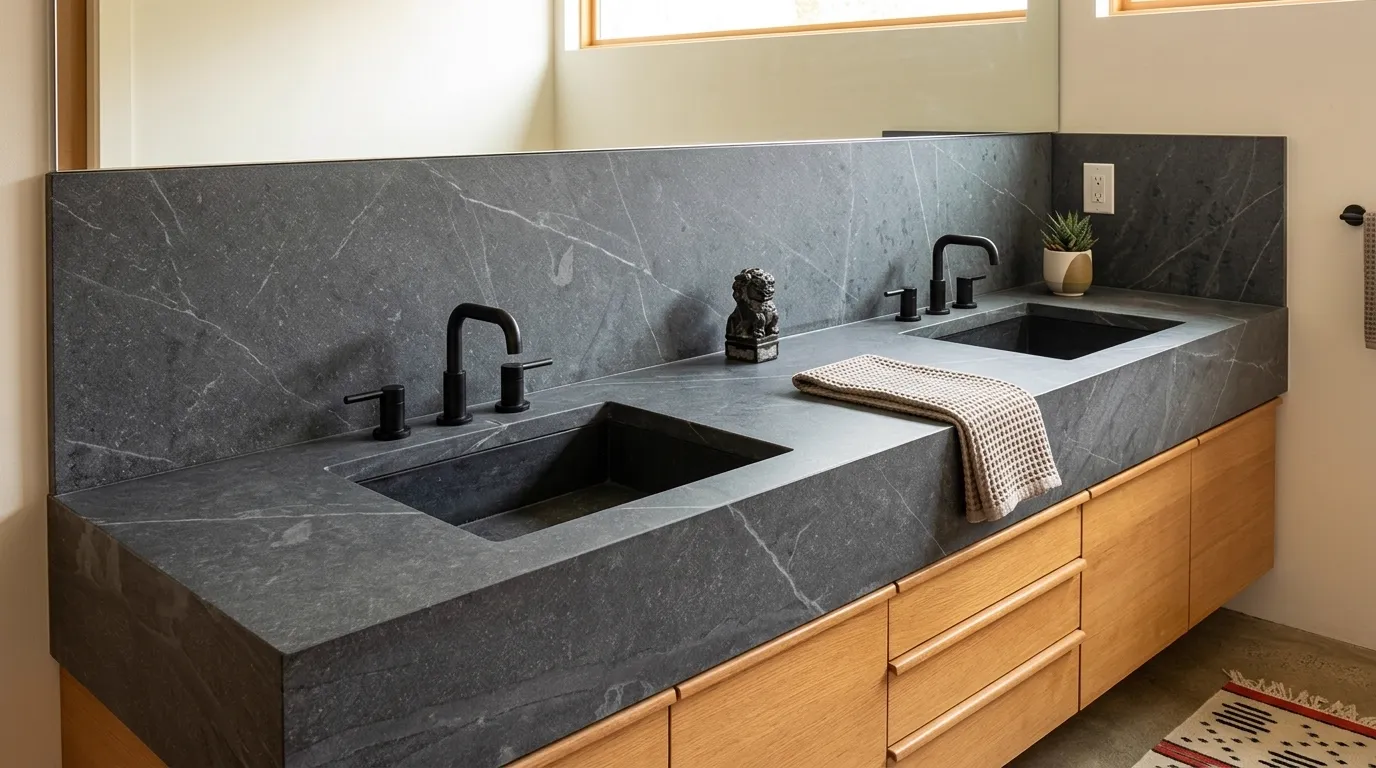
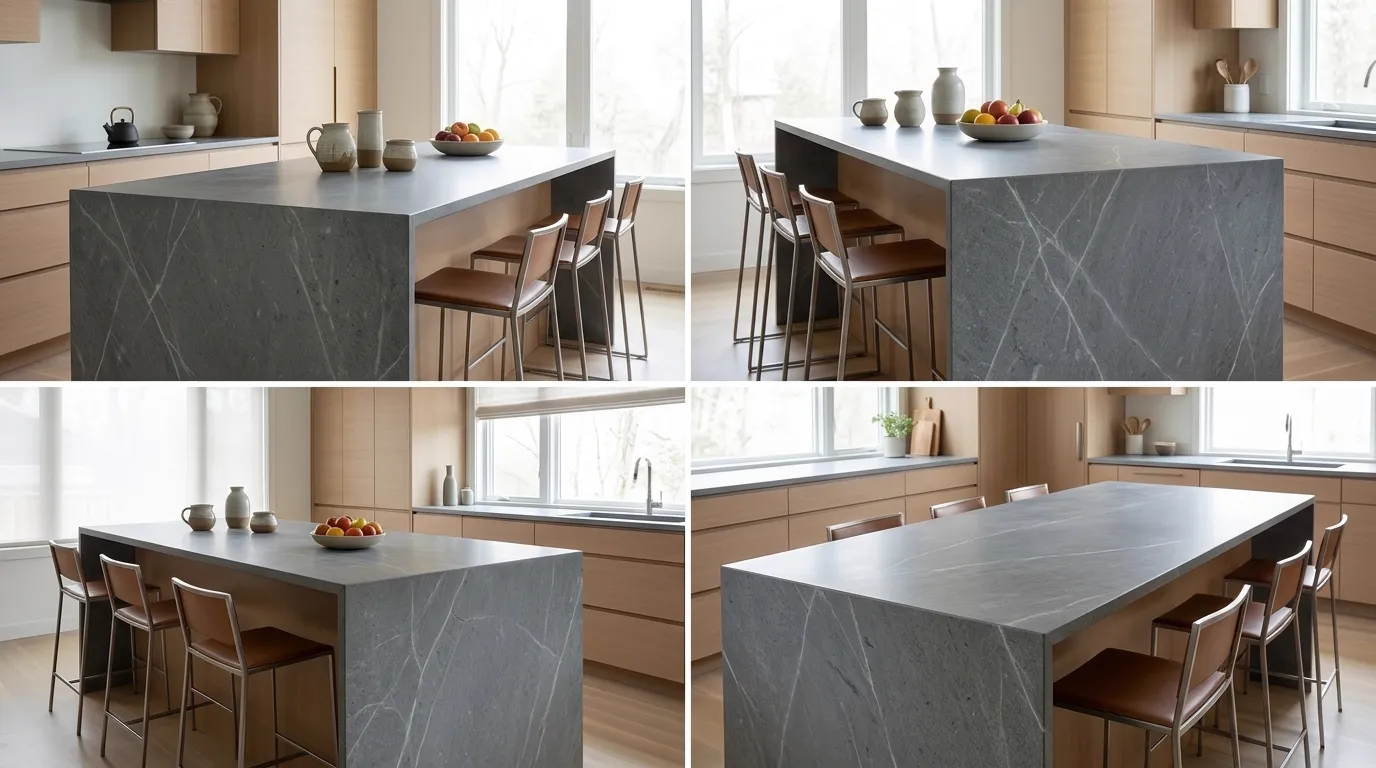
Please note: these three images are digital visualizations, not photographs of completed installations. For photographs of the real slabs, see the gallery above. Natural stone varies slab to slab — check live inventory or view your piece at the West Allis showroom.