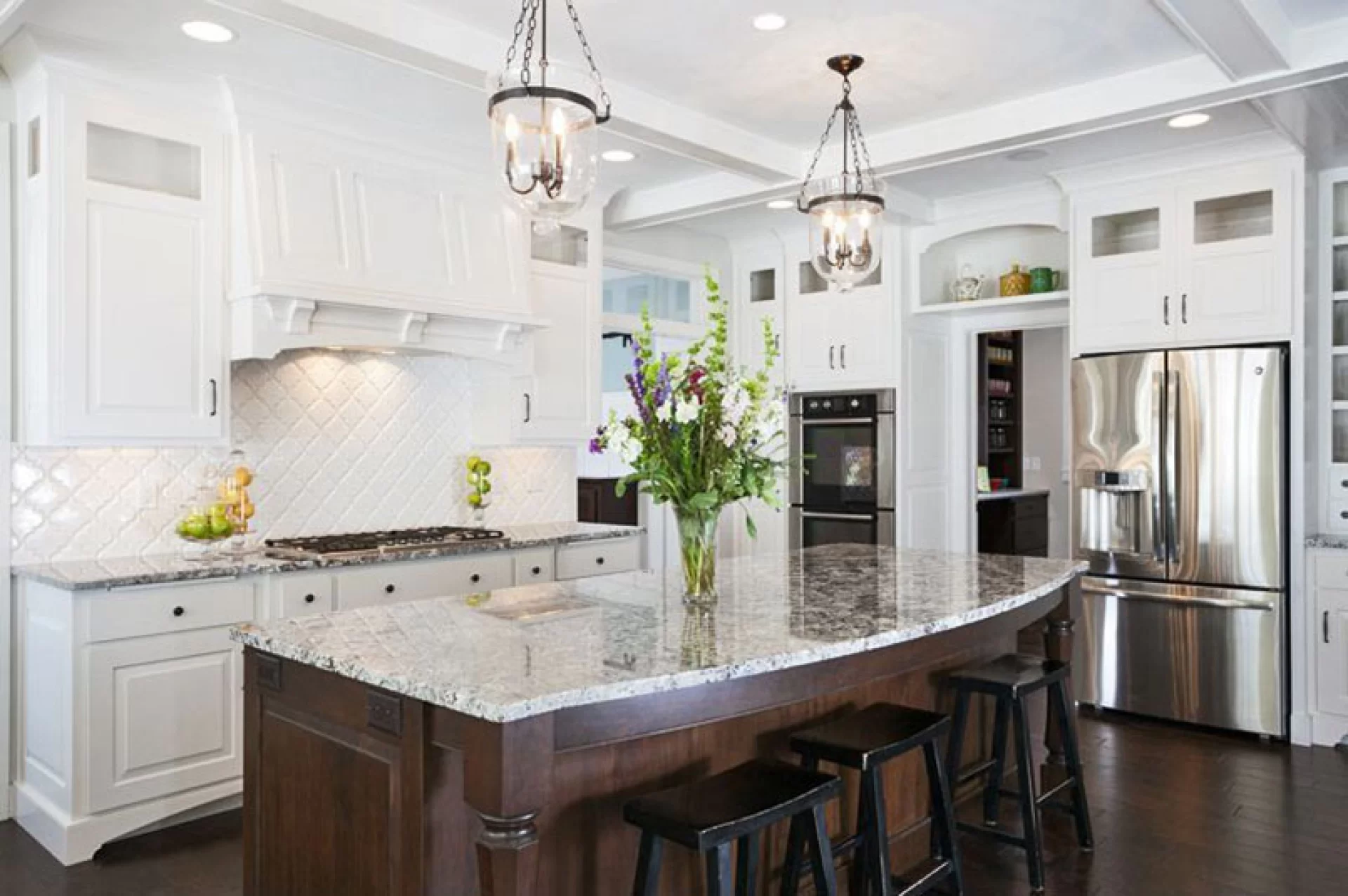
Granite vs Quartz: Which Countertop Is Right for You?
Granite or quartz? It is the most common countertop question we hear at our Milwaukee slab warehouse — and the honest answer is that both are excellent, for different reasons. Granite is 100% natural stone, quarried and cut into slabs. Quartz is an engineered surface made of ground minerals bound with resin. Here is how they really compare, without the sales pitch.

Granite vs Quartz at a Glance
| Granite (natural) | Quartz (engineered) | |
|---|---|---|
| Material | Quarried igneous stone, one-of-a-kind slabs | ~90% ground quartz + resins, factory consistency |
| Look | Unique mineral movement; no two slabs alike | Uniform, repeatable patterns — ideal for matching |
| Heat | Excellent — hot pans rarely mark it | Good, but resin can scorch; use trivets |
| Scratches | Highly resistant (Mohs 6-7) | Highly resistant (Mohs ~7) |
| Stains & sealing | Penetrating sealer, check with a water-drop test; then very stain resistant | Non-porous; never needs sealing |
| Outdoor use | Yes — UV stable | No — resin yellows in sunlight |
| Maintenance | Low: mild soap + annual reseal | Lowest: mild soap only |
| Best for | Natural-look kitchens, outdoor kitchens, one-of-a-kind islands | Busy family kitchens, uniform modern designs, baths |
Durability in Real Kitchens
Both surfaces handle daily life better than almost anything else you can put in a kitchen. Granite takes the heat crown: pots straight off the burner rarely leave a mark. Quartz takes the convenience crown: because the resin binder makes it non-porous, it never needs sealing and laughs off wine, coffee and oil. With granite, a five-minute annual reseal buys you the same peace of mind.
Looks: Nature vs Precision
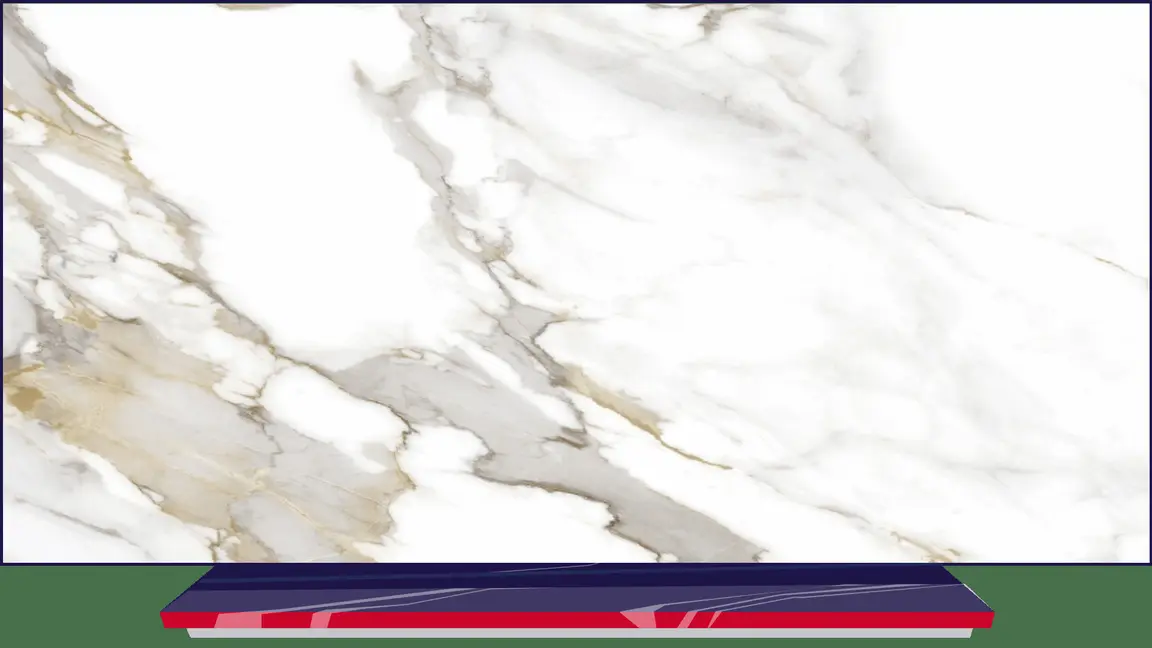
If you want a surface nobody else has, granite wins by definition — slabs like Cosmos, Blue Nile or White Sparkle are geological one-offs. If your design depends on consistency — a long island plus matching perimeter in the same tone — engineered colors like Calacatta Gold HD or White Sparkle Quartz guarantee it.
What Each Material Actually Is
Granite is an igneous rock: molten rock that cooled slowly deep underground, so its minerals grew into visible crystals of quartz, feldspar and mica. Every slab is cut from a quarried block, which is why no two granite slabs are identical.
Quartz countertops are engineered. Roughly 90% ground natural minerals are mixed with polymer resins and pigments, pressed into slabs and cured in a factory. The pattern is designed, so slabs of the same color match closely.
Porosity and Sealing
This is the biggest practical difference. Granite is natural stone with tiny pores, so it is usually sealed after installation and resealed from time to time. Some dense, dark granites absorb almost nothing; lighter granites usually need sealing more often. To check, put a few drops of water on the surface: if the stone darkens within 10–15 minutes, it is time to reseal.
Quartz is non-porous because the resin fills the spaces between the mineral particles. It never needs sealing, and coffee, wine or oil sit on the surface instead of soaking in.
Hardness, Scratches and Chips
Both surfaces are hard enough that normal kitchen use will not scratch them, and both are far more scratch resistant than marble or laminate. Granite gets its hardness from quartz and feldspar crystals. Quartz surfaces get theirs from ground quartz, held together by resin.
Either material can chip if something heavy hits an edge or a corner. A rounded or eased edge profile chips less than a sharp square edge. Your fabricator can repair small chips with a color-matched filler on either surface.
Heat: Where Granite Has the Edge
Granite formed under intense heat, and a hot pan set down briefly will not hurt it. Quartz is different: the resin that binds it can scorch or discolor under a hot pot, a slow cooker or an electric griddle left in one spot. With quartz, always use a trivet. With granite, a trivet is still a good habit for very hot cookware and near seams, because sudden temperature changes stress any stone.
Sunlight and Outdoor Kitchens
For an outdoor kitchen, the answer is clear: choose granite (or another natural stone such as quartzite). Ultraviolet light breaks down the resin in quartz over time, which can yellow or fade the surface. That is why most quartz manufacturers exclude outdoor installation from their warranties.
The same applies indoors where a countertop sits in strong, direct sun for hours every day. Granite does not change color in sunlight.
Seams, Slab Size and Large Islands
Slab size decides where seams go. Standard quartz slabs are about 127 × 64 inches and jumbo quartz slabs about 138 × 79 inches; a number of colors come in jumbo. The typical granite slab is about 127 × 78 inches; sizes vary from block to block. If your island is longer than one slab, it needs a seam. Check the slab dimensions before you finalize the layout; each slab’s size is listed in the live inventory.
Seams are usually less visible in quartz and in busy, speckled granites. In granites with strong movement, your fabricator will plan the layout so the pattern flows across the seam.
How Each Looks After Years of Use
Granite looks the same after decades as it did on day one. Its color is in the stone itself, and normal wear simply blends into the pattern. Kept sealed, it resists stains well in daily use.
Quartz also keeps its look for many years indoors, as long as it is protected from direct heat and long exposure to strong sunlight. Because the pattern is uniform, a scorch mark or a repaired chip can be easier to see than on busy granite.
What Affects the Cost
There is no single answer to which one costs less. The stone or the quartz color you choose, the slab size, the number of seams, the edge profile, cutouts and the installation all change the final number. If you are deciding between the two, ask your fabricator to quote granite and quartz for the same layout and compare like for like.
Who Cuts and Installs the Countertop?
StoneX USA supplies full slabs of granite and quartz. Measuring, cutting, edging and installation are done by independent fabricators, who also give the final quote. If you need one, see our fabricator partner locations. For another natural-stone comparison, see granite vs marble.
Which Should You Choose?
- Choose granite if: you cook hot and heavy, want natural uniqueness, or are surfacing an outdoor kitchen or sunlit room.
- Choose quartz if: you want zero maintenance, consistent color across large runs, or a controlled contemporary palette.
Still deciding? Compare the full granite collection and quartz collection online, then visit our West Allis slab showroom to see full-size slabs side by side. Also in this series: granite vs marble and quartz vs quartzite.
Granite vs Quartz: Frequently Asked Questions
Which is more durable, granite or quartz?
They are close. Granite resists heat better; quartz resists stains better and never needs sealing. Both resist scratches in normal use for decades.
Is quartz cheaper than granite?
The ranges overlap heavily. Entry granites and entry quartz are comparable; rare exotic slabs of either can cost several times more. Compare slab by slab, not category by category.
Can quartz go outdoors?
No — UV yellows the resin and most manufacturer warranties exclude outdoor installation. For outdoor kitchens choose granite or quartzite.
Does granite need a lot of maintenance?
No. Wipe with mild soap, and reseal when a water-drop test shows the stone darkening — a five-minute job with a wipe-on sealer.
Which looks more natural?
Granite — because it is natural. Quartz reproduces stone looks with impressive realism, but the movement repeats across slabs by design.